
Autex Celebrated 25th anniversary – approaching 20th Autex Conference

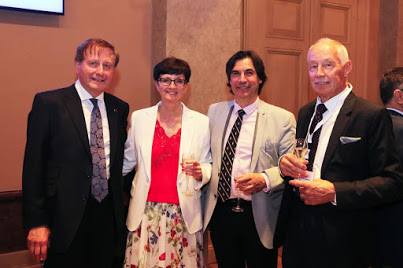
The global 19th AUTEX conference celebrated two textile anniversaries in Gent, Belgium. AUTEX, the Association of Universities for Textiles, has achieved 25 years of European and global cooperation. The event hosted by the textile group at Ghent University, which is celebrating 90 years of textile activities.

AUTEX stands for the Association of Universities for Textiles being a worldwide network of textile universities, founded in 1994.  Over the years a strong enlargement took place and the Association currently has 39 members from 30 countries. 
The current chair is Prof. Mirela Blaga from ”Gheorghe Asachi” Technical University of Iasi in Romania. 
The secretariat is located at Ghent University, Department of Materials, Textiles and Chemical Engineering. 
The mission of AUTEX is to facilitate co-operation amongst its members in high level textile education and research.  Objectives are to promote the activities and achievements of the member Universities on a European and Global stage, to facilitate research, co-operation in the development and delivery of high-level taught courses and teaching materials, to encourage student and staff mobility and to organise annual symposia to disseminate cutting-edge issues to textile professionals and students.

The 7th Autex Conference in 2007 was organized in Tampere, Finland, hosted by Tampere University of Technology.

The Master of Textile Engineering is a two-year master’s programme in the field of textile engineering. The programme was developed in the framework of and with full support of the Erasmus programme of the European Union. Autex is publishing Quarterly Autex Research Journal, free of charge and open to everyone in member Universities.

The Autex 19th Conference programme included welcome opening speech of “Mr Autex” Prof. Paul Kiekens, Lifetime Achievement Award, and keynote plenary presentation Materials for tomorrow by Dr.  Stalios, DG Research & Innovation. Further key notes were addressed to Future Textile materials by Dr. Shafaat, Fiber R&D Section, Spiber Inc. Japan and New programmable materials systems for biomedicine and highly advanced technologies by Prof. Cherif, TU Dresden, Germany.

Highlights of the plenaries

As some interesting highlights from the versatile plenary programme carbon, functional, and bio-based fibers are referred.

PAN/Lignin blends, with 1008 filaments and 1-20 wt% lignosulfonate, were spun as CF precursors and extensive textile-mechanical investigations were carried out. Batch trials have been successfully performed for different degrees of stabilization.

HDPE-based carbon fibers have been studied and they showed a special three dimensional interconnected microporous structure, which are very promising candidates as cathodes for lithium-sulfur (Li-S) batteries. The application of these innovative developed HDPE-based microporous carbon fibers for Li-S batteries is under investigation.

The in situ Raman method can be used to optimise the piezo-electric properties  in manufacture of PVDF fibers. This opens new perspectives for fibers optimization by controlling the evolution of the structure when changing process parameters.

To increase the flexibility of PLA it is possible to add a low molecular weight plasticizer or blending it with a flexible polymer such as poly(butylene adipate-co-terephthalate) (PBAT). The use of a proper compatibilizer is important for a better modulation of properties thanks to the achievement of a phase morphology haracterized by a lower dimension of the dispersed PBAT phase and an increased adhesion.

The combination of phosphonic acid with aminosilanes is leading to a good flame-retardant finish. By binding the phosphonic acid to a silane the washing resistance is increased. With commercially available amino- or isocyanato-silanes and different phosphor-compounds a broad library of flame retardants was build.

Polyphosphazenes, inorganic rubbers, are well known for their flame retardant properties, depending on their phosphorus-nitrogen backbone. On basis of this knowledge we developed new photo-graftable poly- and cyclophosphazene (PPZ), which is applicable on textiles and give them permanent flame retardant properties. For cotton, PET, PA and blends of them flame retardant effect is achieved. For both classes (silanes and phosphazenes) of flame-retardant materials we find that after the first washing cycle the add-on is stable over six washing cycles.

Continuous filaments were spun from native silk solution and manufactured into three-dimensional fiber-ceramic textile implants using an additive manufacturing process. Cell culture analyses showed good biocompatibility of the implants and an induction of bone differentiation.

Bioabsorbable immiscible polymer blends of poly(D,L-lactide) (PLA) and polycaprolactone (PCL) were studied using  twin screw extrusion in a large range of compositions, from PLA90PCL10 to PLA50PCL50 per 10% slice in order to evaluate the spinnability of these blends. Then multifilaments were immersed in a DMEM media at 50°C during 35 days and their mechanical properties were tested in order to understand the relation between the morphology and the degradation process.

Graphene oxide (GO) fiber shaped materials showed promising light weight as flexible and robust wearable energy storage components. Pristine GO fibers were spun by wet-spinning method and then coated by pyrrole (Py). Promoted by FeCl3, polymerization was completed and polypyrrole (PPy) coated GO fibers served as electrodes and showed a rather high capacity.

Water soluble esterified nanocellulose (ENC) was prepared with various anhydrides in expeditious, yet eco-friendly ways by using deep eutectic solvent (DES), ultrasonic and microwave irradiation. Phthalic anhydride and DES made of oxalic acid and choline chloride were mainly used as a reagent and solvent. Results indicated that shape and size of ENC could be varied by preparation methods. Analyses of ENC suggested that oxalic acid participated as both solvent and reactant, forming various types of anhydrides with reagent and cellulose.

The comparative marine biodegradation of three wool types and four synthetic fibres with which wool were studied via a method based on a standard biodegradability test. We confirmed that wool readily biodegrades in sea water, consistent with earlier findings relating to soil biodegradation. Wool biodegradation appears to progress through phases relating to its composition and microstructure. We are now investigating the effect of standard chemical finishes used on wool fabrics, and the correlation between accelerated laboratory methods and ‘real world’ biodegradation.

 Adsorption is one of the most effective methods used to remove reactive dyes from wastewater and, different adsorbents such as activated carbons, biosorbents and clay minerals can be used for the adsorption. In this study, the adsorption of Reactive Red 141 dye on montmorillonite based commercial organoclay compounds and the organoclay modified with hexadecyltrimethylammonium bromide was investigated and a high color removal was observed. The adsorption kinetics were modelled using pseudo first and second order kinetic models. The pseudo-second kinetic model was found the best fitted.

For more details, please contact www.autex.org

Next Confrence – AUTEX 20th Conference June 16.-20.2020

Autex 25 and 1st 20 years after the 1st AUTEX Conference, the Centre of Textile Science and Technology of University of Minho – 2C2T – is very pleased to invite you to come again to Portugal, the country where the first edition of the conference took place.

Recognized as a reference among the textile scientific community, the AUTEX conferences gather every year large number of researchers that share their ideas and achievements in various research and educational projects.

Unfolding the future is the moto of the 2020 edition of the Conference that will be held at Guimarães, from the 16th to the 20th June 2020.

At the beginning of this new decade, very important challenges will be faced concerning the sustainability of our planet, that directly impact the textile and fashion business. The Autex2020 Conference will be the right place to unveil and show the novel approaches, concerning materials, technologies and business models, that are being thought and developed.
Viscose and polyester focus on sharpening biobased processes and sustainable supply chains

Viscose
The textile fiber industry is facing new challenges due to the population growth and the increasing demand in consumption and technical goods. The demand in textile fibers is predicted to raise by at least 77% by 2030. The share of natural and man-made cellulosic fibers (MMCF) is expected to be between 33 and 37% of the global fiber consumption. Due to the limited expansion potential of cotton production, alternative new technologies to the currently commercialized viscose and lyocell processes find change to fill the so called future cellulose gap. At the same, however, the ecological and economical status of the existing viscose supply chain needs to be continuously improved.
In recent years, fashion has emerged as a rapidly growing sector using forests for fabrics such as viscose, modal, lyocell and other trademarked textiles. Vibrant forest ecosystems in North and South are critical for maintaining species diversity, a stable climate and freshwater systems. That is also of a key importance when building new capacities for dissolving pulp by Metsä Fiber and others in Finland.
Many viscose producers are interested to develope their processes for more environmental by reducing thei water and air effluents. The consumption of carbon disulphide and  loss of Glauber´s salt with waste water have been steadily decreased.  Some of the viscose fibre producers (e.g. Birla, Lenzing)complete audits and make LCA analysis of their current process and supply chains confirming the safety and that the risk of sourcing wood from ancient and endangered forests or other controversial sources is low risk.
Moving forward, the companies intend to further improve sustainability from forest to fashion by undertaking steps such as continuing to advance research and development on new technologies of recycled and alternate fibres; supporting conservation solutions in the world’s ancient and endangered forests, ensuring mills and wood suppliers continue to maintain their own independent third party certification systems.
Polyester
The ecological status of of of the major textile fiber, polyester (PET) has been concentrated mainly on recycling of plastic bottles to textile fibers by using thermal processing. Replacing ethylene diol by fermented 1,3-propylene diol result in poly(trimethylene terphalate, PTT), which is biobased by 37%.  Recent development on biobased monomers and bioplastics shows inreasing possibilities for totally biobased polyesters. Bioethanol can be reduced for manufacturing bioethylene and further ethylene diol.  Fructose hydrolyzed from plant-based materials can be hydrolysed twice to alkoxymethylfurfural and further oxidized to furandicarboxylic acid. Thus, both of the polyester monomers in PEF are biobased.

DuPont Industrial Biosciences is the 2017 European Bio-based Materials Company of the Year, according to leading market research firm Frost & Sullivan. DuPont has shown both commercial and pre-commercial success in developing new biomaterials that meet the needs of customers and consumers worldwide. For example, DuPont Sorona, a high-performance, patented polymer, is made with a renewable, plant-based ingredient, for use in everything from carpets to ski jackets to sarees. Additionally, fibre made with Sorona polymer possesses exceptional softness, high durability, stretch, and stain resistance, and often outperforms petroleum-based products. In early 2016, DuPont and Archer Daniels Midland Company (ADM) announced a new technology that produces a biobased monomer, furan dicarboxylic methyl ester (FDME), from a renewable feedstock. The process has potential to expand the materials landscape with applications in packaging, textiles and engineering plastics, the manufacturer explains. ADM and DuPont have taken the initial step in the process of bringing FDME to market by moving forward on the scale-up phase of the project. An integrated 60 ton-per-year demonstration plant is currently under construction in Decatur, IL, and is expected to begin operations in the second half of 2017. The facility will provide potential customers with sufficient product quantities for testing and research as well as the required basic data for a planned commercial-scale plant.

European textile technology platform discussing on future directions of the industry

ANNUAL ETP CONFERENCE: circular-biobased-digital
More than 180 members of the European Textile Technology Platform (TextileETP) and other stakeholders from 30 countries gathered on 24-25 April in Brussels to explore future technology, industry and policy directions for the European Textile and Clothing industry. The former president Paolo Canonico stated during the opening ceremonies, as follows:

”Most professionals agree that the trends towards a more circular, bio-based,digital and smart textile and clothing industry is inevitable, but the technological, political and economic uncertainties in this process are high. I am calling upon continued support from EU policies and programmes to make this necessary transition successful especially for the many smaller companies of the sector.”

Cellulose gap

The continuous market share growth of synthetic fossil-based textile fibres experienced over the last decades may be soon challenged by man-made
cellulosics and a wide range of other bio-polymer based fibres. Hydrophobic synthetics are needed in most of products to response for mechanical properties and durability, and hydrophilic fibers are needed for their water uptake and comfort properties. Present main natural fibres like cotton or wool are unlikely to fill the “cellulose” gap. It may appear that a remarkable share of synthetic polymers is produced from bio-based monomers. These trends are driven by political and market pressures aiming at slowing down fossil CO2 release into the atmosphere and (micro)plastic pollution of land and seas.

Marine microplastics 

According to Michael Carus of Nova-Institut GmbH, Hürth (Cologne), textiledomestic laundries are releasing 35% of the ocean release of microparticles, especially microplastics through the waste waters. Smaller releases are coming from car tyres and from all types of city dusts. The particle size is on micro meter level and due to the inert chemical behavior very difficult to remove during wastewater treatment.

Limited evidence on the fate of natural animal and plant fibres such as wool and cotton in the environment comes from studies showing that biodegradation occurs in soils in weeks to months. Laboratory and in-situ experiments from New Zealand concluded that wool fibre is also biodegradable in marine environments under the action of the wool degrading enzymes. Observations of textile-related marine debris in the United States indicate that whereas acotton T-shirt disappears in 2–5months and a wool sock in1–5years, plastic fibres take decades (30–40years for polyamide fabric) to hundreds of years (450years for disposable PP-diaper).

Other studies made by Norwegian, U.S., Dutch and Chilean marine researchers on Pacific Ocean´s flotating plastic wastes have shown, that the amount of micro and  nanoparticles can be higher than of plankton in condensed vortex areas. Due to the insolubility of plastics in water, some of the toxic organic pesticides and monomers are attached on particle surfaces, such as DDT, PCB and BPA.

Source: Beverley Henrya, KirsiLaitala, IngunGrimstadKlepp(2019): Microfibres from apparel and home textiles: Prospects for including microplastics inenvironmental sustainability assessment. Science of the Total Environment 652(2019) 483-494.

Global approach to sustainability by UN

The keynote speaker Janez Potocnik, former EU Commissioner for R&D&E and cochair UNEP International Resource Panel (IRP) stressed that ”Current climate change policies in Europe and worldwide focus tao one-sidedly on CO2 and theenergy transition, while neglecting other crucial elements such as land, water and materials use and how to decouple the increase of global welfare from growth in the use of these resources. A sector like textiles and clothing must make its own contribution to a responsible management of these resources if it wants to call itself sustainable.”

According to Potoznik, Circular Economy (CE) should be a clear priority of the next European Commission by establishing a credible, mutually reinforcing link between CE/Sustainable Development Goals (SDGs) and competitiveness. Further building new coalitions for CE change by broadening ownership of the CE idea – partnering with those dealing with climate change, bio-economy, health, digital transformation, regional policy, research and innovation, international relations, development aid, and trade. Continued working on plastics but add also the product groups beyond the plastics (textile, food) is needed. Thus, in future CE programmes improving the extended producer responsibility is needed, as wel as eco-design to deliver the whole potential and focus on economic signals and drivers –taxes, subsidies, public procurement. Continue working on data, reporting, and on greening the financing.

Circular Economy

Focus on retaining value in the CE process and on social aspects of CE transition. The final results of the EU project Bio4Self demonstrated that bio-based textile fibres can find uses well beyond clothing and interior textiles and make for interesting solutions for many technical textile and composite markets, provided they are processed in the correct way. The results of EU-project RESYNTEX, which explored the technological feasibility and economic viability of bio-chemical recycling of major textile fibre types, was presented in a full session. The way to large-scale industrial application however is still long and an expert panel discussion at the end of the RESYNTEX session concluded that significant further technology development work is needed and must be complemented by smart regulatory and economic incentives before major industry investments can be made. The digital transformation of manufacturing, industrial supply chains and distribution is another inevitable innovation trend for the textile and clothing industry. lt doesn’t only enable to use of data to optimize and speed up processes, but also creates unprecedented levels of transparency in global value chains all the way to the end consumer. This in turn leads to the rise of new business models that expose and exploit unbalanced value capture in current global fashion supply chains and potentially eradicate the massive amounts of waste and
overproduction in the conventional fast fashion system. EU projects such as TCBL or FBD_BMODEL try to demonstrate that local and regional creative business labsconnected to digital microfactories for efficient short run production can be the answer and reorient the fashion business from a cost-based to a value-based competitive model.

Digital technology

The fusion of digital technologies with textile and fashion products in the form ofsmart textiles or fashion tech is another major avenue for innovation and eventual business growth. The soon to start EU project SmartX will seed-fund 40 projects to accelerate manufacturing of smart technical textile products and the already running DeFINE project coaches fashiontech start up’s and small companies all
across Europe.The financial support of the European Commission for textile research and innovation through programmes such as HORIZON 2020 has the potential to pick up further in the coming years as many textile innovations cater to key themes in Europe’s research and innovation policies such as sustainability, circular economy,bio-based materials, personalized health or the digitization of EU industry.

Closing session keynote speaker Peter Dröll, Director of lndustrial Technologies at the European Commission’s DG Research and lnnovation encouraged the industry and its research community ”to come with bold ideas for globally impactful textile innovations to be supported in the upcoming EU research and innovation.

To prepare the European textile and clothing industry and research community for these new challenges the Textile ETP in its General Assembly adopted a new strategy for the coming years. The Platform will work more focussed ane a few selected strategic textile innovation themes and try to involve all value chain actors in these technologies or markets, whether textile or textile-related.

The General Assembly also endorsed the members of its Governing Board for the period of July 2019 to June 2020 and elected Michael Kamm, Germany as its new President. Out-going President Paolo Canonico, ltaly will remain at the Board as Vice-President Treasurer, joined by Katarzyna Grabowska, AUTEX (Poland) and Braz Costa, Textranet (Portugal) as further Vice Presidents.

Nobelists support sustainable chemistry at the Chembio2019

NOBEL LAUREATES CELEBRATING 100th ANNIVERSARY OF THE FINNISH CHEMICAL SOCIETY CHEMBIO2019
Circular economy, Natural materials, Future food, Artifical intelligence and Climate change as main of great variety of themes
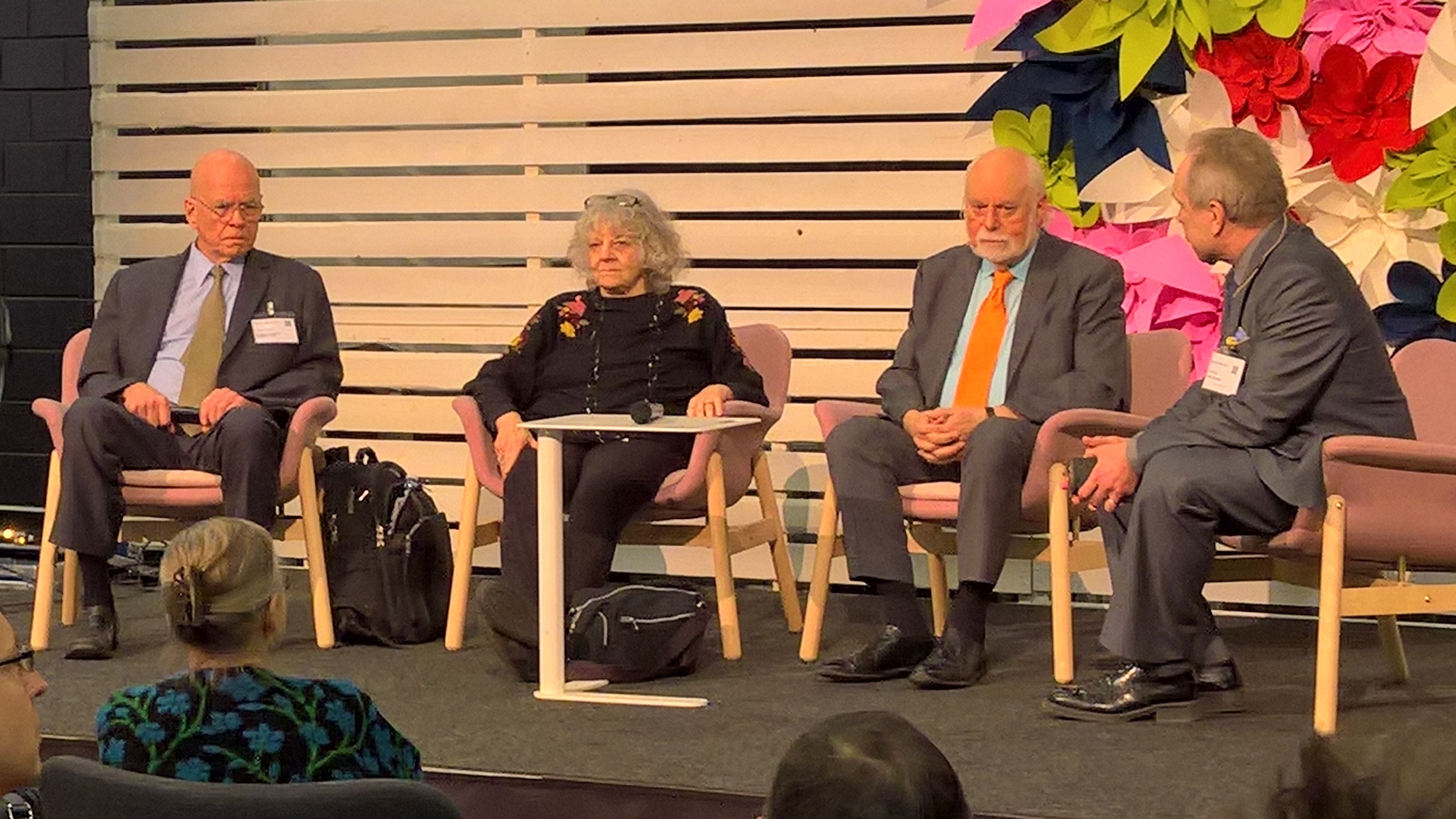
To celebrate the 100th anniversary of the Finnish Chemical Society the main speakers in two seminars were three winners of the Nobel Prize in Chemistry.
Ada E. Yonath is an Israeli professor, biochemist and crystallographic researcher at the Weissmann Institute in Israel. Professor Yonath is best known for determining the structure of ribosomes using X-ray crystallography. He was awarded the 2009 Nobel, together with Venkatraman Ramakrishnan and Thomas A. Steitz, for his work on the structure and function of ribosomes. Originally Scottish, Professor Sir J. Fraser Stoddart of the University of Northwestern, USA has focused on supramolecular chemistry and nanotechnology, and known for designing and studying the properties of the syntheses of rotachans and catenans. He received the Nobel Prize for Chemistry in 2016, together with Jean-Pierre Sauvage and Bernard Feringa, for the synthesis and design of molecular machines and engines.
K. Barry Sharpless is an American chemist, professor at the Scripps Research Institute, California. He is especially known for his stereoselective oxidation reactions, of which Sharpless was awarded half the 2001 Nobel Prize. The other half divided by William S. Knowles and Ryoji Noyori. The oxidation reactions developed by Sharpless carry its name in the chemistry circles: the epoxidation of Sharpless, the asymmetric dihydroxylation of Sharples and the oxidation of Sharpless.

Nobel Seminar

In the seminar Yonath was describing the chemistry how certain antimicrobiotics interact in ribosomes to become changed and thus inactivated. These results can be used in further develop on more sustainable antimicrobiotics. Stoddart was presenting his pioneering research on a new field in organic chemistry by using mechanical bonds for molecular recognition, self-assembly processes for template-directed mechanically interlocked syntheses, molecular switches, and motor-molecules. Using rotaxanes and catenases these advances have formed the basis of the fields of nanoelectronic devices, nanoelectromechanical systems, and molecular machines. These interlocked molecules have potential uses as molecular sensors, actuators, amplifiers, and molecular switches, and can be controlled chemically, electrically, and optically. Sharpless began developing methods for using catalysts with such properties during oxidation reactions – reactions in which electrons are emitted. Among other things, this has enabled production of various types of medication with the Nobel team by transition metals to make chiral catalysts for an important type of reaction called hydrogenation e.g. in tDOPA drug which is used in the treatment of Parkinson’s disease.
The Laureates have opened a completely new field of research in which it is possible to synthesise molecules and material with new properties. Today the results of their basic research are being used in number of industrial syntheses of pharmaceutical products such as antibiotics, anti-inflammatory drugs and heart medicines.
In the panel discussion the role of science in society was underlined in facing the main global challenges: environment, energy, materials, food and health.  It was stated, that nothing original is intentionally discovered by scientists who cannot tolerate a high degree of uncertainty, group membership does not guarantee results. It has been shown, that a certain basic freedom under designated area of science guarantees the results, which often are generating new ideas. Because of the nature of the research, however, group members preselect themselves and possess a remarkably high degree of independence of thought as well as scientific motives tilted toward discovery, not reward. As a group, they hold superior standards for judging the significance of research sharing with all them of the glory of achievement, e.g. a Nobel Prize.

Circular economy
The seminar Chemistry in the circular economy presented that resources are kept at their highest utility and value for as long as possible. The development of a more circular economy requires systemic changes, and renews production, consumption, business models and regulation.
This seminar highlights the importance of chemistry and chemical companies in this development. Several case-examples are presented, especially in the areas of circular plastics and circular water. As in a circular economy, the systems of material streams differ from those in a linear economy, new challenges are faced in the chemical regulation, occupational safety and product labelling.
Lena Smuk, RISE-Research Institutes presented a Swedish approach to making polymer flows circular. Polymers and their multiple applications are showing a high importance in everyday use and pollution of marine environments. The presentation concentrated on the share of green plastics made from cellulose/sugar, castor oil or wood based. Among the renewable plastics polyethylene, polypropylene, PVC, polyurethane and polyamide are durable biobased plastics. Starch, cellophane, PLA and PHA are renewable and biodegradable.

Other examples of Circular Economy were tall oil, water, and the demands of chemical regulation on the quality of secondary raw materials.

Thermoanalytics and combustion engines
The symposium on “Thermanalytical aspects” showcased thermoanalytical and calorimetric studies on materials found in nature, both of natural and artificial origin. The natural materials discussed in the symposium are various biomasses, polyphenols and hackmanite. The presentations also deal with the studies of the organic matters in the soils and microplastics where thermoanalytical and calorimetric methods can be very helpful.
Combustion and internal combustion (IC) engines are and will be crucial to world and Finnish economy for many years to come, however limited on future use caused by carbon dioxide production. Finland, exits significant ongoing research efforts and business opportunities to produce renewable fuels, also in large scale, with purpose to use these fuels both in the current fleet and in future IC-engines. At the same time, according to the current knowledge, efficiencies of IC-engines of vehicles can still be improved significantly and, consequently, much efforts have been devoted to accomplish this target. In addition to these objectives, there exist, for example, significant interest to use inexpensive natural gas (mainly methane) in IC-engines of ships. However, combustion process with natural gas is more demanding to handle than with conventional fuels.
The plenary speaker in the seminar, Henry Curran, Galway, Ireland explained detailed chemical kinetic mechanisms for fuel combustion and species measurements of the particulate matter reducing additive tri–propylene glycol monomethyl ether. The importance of endothermic pyrolysis reactions in the understanding of diesel spray combustion is crucial for the whole understanding. Curran has studied also a chemical kinetic interpretation of the octane appetite of modern gasoline and the combustion kinetics of the lignocellulosic biofuel, ethyl levulinate. Controlling and optimizing Fuel – Combustion Chemistry – IC-engine – entity is challenging and requires know-how from several different areas.The Future Food seminar

The Future Food seminar contained presentations on Novel technologies and sustainable food systems, By Dr. Tuomisto/Helsinki University, Future food designed and produced in cell factories, Dr Emilia Nordlund, VTT and Food security and the role of Finland in future food production by Dr Kaisa Karttunen. Dr. Tuomisto has been studied food systems and livestock production. They are major contributors to environmental stressors, such as climate change, land use change, loss of biodiversity, nutrient enrichment of waterways and water depletion. Due to global population growth and increased consumption of animal source foods, the environmental impacts have been predicted to dramatically exceed the safe planetary boundaries unless serious mitigation actions will be implemented. The possibilities to reduce the environmental impacts of conventional livestock production are limited, and therefore, more radical changes in the food production technologies are required. Due to the closed and controlled production conditions, cellular agriculture could have potential to produce food with drastically lower environmental burden than conventional agriculture.

Kirja Säterin kirjavasta historiasta julkaistu

Perjantaina 19.10.2018 Valkeakoskella oli 75-vuotta toimineen Säterin kuitutehtaan historiakirjan julkistamistilaisuus. Lähes neljä vuotta sitten perustetun Säterin historiatoimikunta r.y.:n sinnikäs työ tuotti yhteistyössä kirjailija FT Pekka Kaarnisen kanssa mielenkiintoisen ja yksityiskohtaisen teoksen tehtaan vaiheikkaasta historiasta. Toimikunnan toisena tavoitteena oli Säterin arkistomateriaalin pelastaminen ja taltioiminen ja sille luotiin samalla luotettavat säilytystavat ja -paikat. Kirjan johdannossa toimikunnan puheenjohtaja, entinen Säterin tuotantopäällkkö Ins. Asko Peltonen toteaa, että kirjoittamisen aikana oli vielä mahdollisuus haastatella liike- ja tuotannolliseen toimintaan osallistuneita aikalaisia. Tämän takia valottuu myös Säterin innovatiivinen ja vaikeissakin tilanteissa selviämisratkaisuihin päätynyt toimintakulttuuri.

Säteri edusti nousevan Suomen ja sotienjälkeisen jälleenrakentamisen asiantuntevaa, kansainvälistä ja uutteraa henkeä, jonka avulla siitä kehittyi Suomelle merkittävä ja kansainvälisesti huipputeknologinen kemian alan toimija. Sen tekninen ja osaamisperintö on nykyään uusien omistajien myötä käytössä maailmanlaajuisesti Sateri Ltd-yritysryhmässä, joka aikoo nousta viskoosibusineksessä maailman suurimmaksi. Suomelle aiheutui omistuksen muutoksesta ja tehtaan lopettamisesta suuret vahingot. Suomessa usko viskoosibusineksen tulevaan kasvuun ei ollut 15 vuotta sitten sellainen kuin tänään.

Sotien jaloista lopullisena sijoituspaikkana toimineen Valkeakosken kauppalan sekä Yhtyneet Paperitehtaat Oy:n merkitys oli tärkeä, jotta tehtaalle saatiin tarvittava infra ja pääomia yhtiön toiminnan alkua ja muutoksia varten. Toiminnan oli mukauduttava markkinoiden ehtoihin, kun selluloosapohjaiset kuidut, kalvot ja sienet sekä muut prosessiin liittyvät kemian tuotteet hakivat paikkaansa kotimaisilla ja kansainvälisillä kilpailluilla markkinoilla. Suomen kuvalehden äänestyksessä valitut tuotenimet säteri, silla ja kelmu joutuivat antamaan periksi standardisoiduille nimille viskoosifilamentti, viskoosikatkokuitu ja sellofaani.

Juhlatilaisuuden esitelmän piti Prof. Emeritus Pertti Nousiainen aiheenaan ” Tekstiilikuidut ja niiden tulevaisuus”. Hän kertasi kuitujen valmistuksen historiaa ja totesi, kuinka 100 milj. tonnin maailmanmarkkinoilla on valtakuitujen polyesterin, puuvillan, polypropeenin, viskoosin, jutin, lasin, sisalin, hampun, polyamidin, polyakryylin, villan, pellavan ja silkin lisäksi lukuisa määrä erikoistekokuituja. Teknisiin tuotteisiin käytetään paljon myös lasi-, hiili- ja synteettisiä kuituja. Polyesteristä on erilaisia versioita sekä osittain biopohjaisesti valmistettu versio, joka voi tulevaisuudessa olla kokonaankin biopohjainen. Puuvillaa on vuodesta 2006 kehitetty geeniteknologian avulla tuholaishyönteisiä torjuvaksi eikä sen tuotantomäärien uskota enää radikaalisti kasvavan. Viskoosikuitujen tuotanto on suhteellisesti eniten kasvanut viime vuosina ylittäen jo polyamidin ja juutin määrät, tullen polypropeenin tuotannon tasolle. Niiden kysyntää kasvattaa edelleen ns. ”cellulose gap”, jossa on kysymys ominaisuuksiltaan puuvillaa vastaavan selluloosakuidun määrän vähentyneestä osuudesta verrattuna polyesteriin ja muihin synteettisiin kuituihin. Suomen metsäsektori, erityisesti Metsä Spring on havahtunut tilanteeseen ja kehittää mahdollisuuksia osallistua markkinoihin paperia arvokkaampien kuitujen muodossa.

Kuitujen ja tekstiilien ympäristökysymyksiin ja kestävän kehityksen vaatimuksiin on alettu vastata laajasti teollisuuden piirissä. Suomessa, Ruotsissa, Hong Kongissa ja muuallakin on kehitteillä menetelmiä kuituseoksista valmistettujen tekstiilien kierrättämiseksi takaisin kuiduiksi yhteistyössä vaatetusteollisuuden kanssa. Kiinan ja samalla maailman suurimmat viskoosikuitujen valmistajat ovat perustaneet kestävän kehityksen ohjelman, joka ulottuu puuraaka-aineen hankinnasta aina kuitujen valmistukseen, jalostukseen ja loppukäyttöön. Mukana on myös kaikkein suurimmaksi viskoosikuitujen valmistajaksi tähtäävä Säteri Oy:n perillinen Sateri Group.

New Forest Biorefineries focus on biofuels, chemicals, textile fibers and new materials

Report from PulpPaper18 Conference in Helsinki

General Trends of forest resources  

The majority of European forests locate between 55th and 70th degrees latitude in Norway , Sweden and Northern Russia. The volume of Finnish forests is continuously growing due to the advanced forest management practises allowing moderate consumption for multiple applications. Thus, the stem volume is presently more than 2350 mill. m3 keeping at the same time 20% of forests in restricted use or outside the commercial use. The annual growth of Finnish forests reached 105 mill. m3 (4,5%), generated mainly (85%) by the areas without any restrictions of use. The present annual cut in 2017 reached 73 mill. m3. In various scenarios of Luke (Luonnonvarakeskus) for a time span of 100 years is has been shown that in case of rising removal to 80 mill. m3, long term intensive forest management is beneficial and volume up to 3500 mill. m3 with a considerable high negative CO2 balance. Digitalization is important for information and planning, for trials of new machine concepts and for monitoring methods (e.g. drones). New technology is needed to overcome the adverse impacts of climate change causing shorter winters and rainfall distribution.

Many European political regulatory instruments are managing wood and nature conservation as well climate change adaptation. These include management of for wood processing, energy value chains and paper/pulp production aiming the broader societal, economic and environmental objectives of EU forest-based bio-economy. There is some incoherence of all these regulations, e.g. sustainability criteria, which still have an influence the potential use of wood and forest biomass in the future.

The novel set of a forest-based biorefinery targets multiple products, such as biomaterials, biochemicals, biofuels and bioenergy. A pioneering biorefining has been developed in Borregaard Norway, where a traditional paper mill was transformed to utilize lignin for energy and chemicals, cellulose for special applications and hemicellulose to produce bioethanol. Lignin-based products include purified lignin, oxylignin- and lignosulphonates and vanillin. From cellulose, special celluloses for viscose and chemical industries, microfibrillar cellulose (nanocellulose) and cellulose sugar are produced. The scope could be enlarged further depending on the overall capacity, wood raw material type and type of cooking process. The pulp-integrated manufacturer (e.g. Lenzing) is able produce acetic acid, furfural, xylose, soda and ashes from hardwood sulphite pulping and sodium sulphate additional to viscose fibers from the fiber plant. Concentrated carbon disulphide gases are recycled (>90%) by means of active carbon, whereas dilute flows are oxidized to sulphuric acid and reused in the viscose process.

The waste material side-streams containing nitrogen, phosphorus and sulphur from biorefineries can be utilized as soil improvment additives in agriculture. Those include slurry from biogas and ethanol, pulp fibers from forest industry, micronutrients from process industry and various additives for soil pH control. This may serve as well as for carbon sequestration and storing it the soil and nutrient recycling, which reduces the amount of ammonia needed to synthetize.

Overall situation in Finland

The Finnish government and a special foundation Sitra support the development of circular economy and development of forest-based loops. Key projects are developing of composite materials, recycling of industrial waste to biocomposites and cross-laminated solid wood elements for buildings. Aditionally, the changes of pulp&paper markets and development of energy, chemicals and textile markets, various new investments and plans are made in Finland. This is increasing the wood demand remarkably, because many of the decided investments (Metsä, UPM, Keitele, etc.) already demand more than 8 mill. m3/a more of wood. Coming investments in Kemijärvi (Boreal Bioref), Kajaani (KajCell) and Kuopio (Finnpulp) plus others may increase the demand by further 8 mill. m3/a.

Metsä Group´s biorefinery produces, beside of pulp, tall oil and turpentine, sulphuric acid, biogas (methane), electricity and bark. In the piloting stage are new textile fibers (ionic liquids) and biocomposites from pulp.

Additional to process control and automatization, digitalization is showing widespread applications in supply chains, robotics, machine learning, virtual reality, cyber security and materials technology. Virtual planning and simulation will be increasingly used instead/before of real world operations, e.g. planning of forest cuts and their transportation logistics and waste water treatment. In industrial maintenance, the machinery and assets, their current information status and service instructions can be easily evaluated. In practical maintenance, inspection, visualization, instructions are used targeting the whole responsible action group at the same time.

Biofuels

Due to the production of carbon dioxide-aware energy biofuels have been realized as an important part of modern biorefineries. Side-streams of mechanical and chemical forest industry, such as saw dust, cellulosic-based waste and residues in and black liquor of kraft pulping are used as raw materials for biofuels. St1 started ethanol plants using forest industry residues in year 2006 in Norway and later included food processing residues as raw materials and modified lignin for diesel and jet fuel production. The biofuel production scheme in Kajaani include thermal treatment, hydrolysis, fermentation, distillation and dehydration stages. Additional to ethanol, turpentine and furfural is produced.

Fortum has increased the share of biomass in power (2%) and specially in heat production (22%). The bio-oil is produced with fast pyrolysis technique under oxygen free conditions. The bio-oil contains several hundreds of different molecules including water, shows a low pH value and has a heating value about half of mineral oil.

Renewable UPM bio-fuels are made in Kaukas Finland from the residual tall oil from chemical pulping by a hydrotreatment and fractionating processes, which ensure the removal of sulphur and overall purity. The products are pure hydrocarbons with physical and chemical properties that match fossil diesel fuel and a naphta oil (high hexadecane/cetane number), which can be used as a biocomponent in fossil gasoline.

Chemicals

The existing utilized side-products generated by the production of sulphite pulps are lignosulphonates, vanillin, acetic acid, furfural and xylose. In case of kraft pulping tall oil and turpentine, sulphuric acid, biogas and bark are produced. The black liquor of kraft pulping can be purified and further advanced products can be produced, such as lignin, oxidized lignin, polymer derivatives for glues and resins, carbon and carbon fibers. According to Ligno-Boost process, lignin products are classified as follows: pure lignin for fuels, odor-free lignin for binders, ultrapure lignin for bioplastics and carbon fibers, pure lignin and carbon green for technical carbons, fractionated lignin for carbon fibers and water-soluble lignosulphonate for dispersants.

Nanocellulose is presently classified rather as chemical than fiber, because of the exceptional behaviour compared to textile and pulp fibers. For separating 30-50 nm nanofibril bundles from pulp fibers, large amount of chemical and physical energy is needed. The production of nanocellulose of 3-4 nm of fibril diameter, chemical, chemo-mechanical and enzymatic techniques are used and a gel-like product containing less than 1% cellulose is resulted. The distribution of nanocellulose fibril shape and properties depend on the production method.  Similar as polymers, nanofibers show shear thinning rheology in water solution and is capable forming films and fiber-like structures when pumped through small slits or holes.

When used in coating of plasticized paperboard for packaging, nanocellulose can introduce the coverage of 1-11 g/m2, which reduces the air and water vapor permeability by 80-90%. The barrier for grease is approaching zero in 5-6 g/m2 coating and for heptane in 9-16 g/m2 coatings. For more easy processing and resulting uniform coatings, higher solids of nanocellulose gels are needed. Additional to coating, nanocellulose can be applied as reinforcing filler in composites, thickeners in paints, cement and cosmetics, and in oil drilling fluid. Due to its transparency, high modulus and flexibility, nanocellulose can be utilized as a layer for constructing optical OLED cover windows.

When using phosphorylated pulp containing 0,3 – 1,2 % of phosphorus in the production of nanocellulose, the properties of thickeners are improved. The tensile strength of the P-nanocellulose film is higher compared with ordinary nanocellulose. It can also be used for reinforcing element in polycarbonate films.

Wood fibers for textiles

Textiles is an important group of consumables, and currently, more than 65 % of the fibres produced globally are synthetic man-made fibres, 34 % are cellulose-based fibres including cotton and man-made cellulosic fibres, and the rest consists of wool and other natural fibres (CIRFS 2015). The advantages of the cellulosic fibres over the synthetic oil-based fibres are their high hydrophilicity and breathability, comfortable touch, biodegradability, biocompatibility and the use of renewable resources. Cotton fibres cover the major part (89.5 % in 2011) of the textiles made from the cellulose-based fibres. Following the trend, it is estimated that the fibre consumption exceeds 15.5 kg per capita by 2030 with the global fibre production of 135.4 million tons (90 mill. tons in 2016). The production of synthetic fibres has increased dramatically since the end of 1990’s and seems currently to response the best for the total fibre demand. The production of cotton has fluctuated from year to year and has increased only moderately. After a steady decrease since the mid 1970’s, the production of man-made cellulosic fibres has started to increase during the past ten years reaching more than 6 mill. tons in 2017.

The increased demand of viscose (cellulosis) fibers has resulted in growing investments and plans of new capacities, mainly in China and South-East Asia. According to the announcements of leading viscose producers, a further 1-2 mill. annual ton is being builded during 2020´s. In many countries, including Finland, there are new processes developed for production of cellulose (viscose) fibers by using solvent or water-based alkaline methods.  This has been motivated pulp manufacturers to add their capacities by rebuilding paper pulp processes to dissolving and to build new capacities specially since 2011 to 2019 in China, South Afica, Chile, Thailand, Laos, Indonesia, Sweden and Finland. The quality requirements for dissolving pulp include purity and low variation, high alpha cellulose content, adjusted polymerization degree (DP, PD), low hemicellulose content and high brightness. Main processes are prehydrolysed kraft pulping and sulphite pulping. Further purity and separation of chemicals (e.g. MCC in Kajcell and xylans) can be reached by novel autohydrolysis processes before or after cooking.

Some novel approaches in Finland aim to utilize recycled cardboard or fine paper and cotton as a raw material for regenerated cellulose fibers. The first one is based on ionic liquids, which are capable for dissolving various cellulose sources. The second one utilizes waste cotton, e.g. blue jeans by deinking and thermal treatment to cellulose carbamate. In both cases, the preliminary results are promising and a pilot plant design for carbamate process is under way.

Bioplastics and new cellulose materials

The environmental problem of plastic waste in oceans, caused by transfer of the local waste along the main rivers of the globe to oceans, has caused much public attention. The consumption of plastics has grown from 1,5 mill. tons in 1950 to 322 mill. tons in 2015, which is more than three times higher compared to textiles. Many brand owners producing consumables have already stated to change their raw-materials from oil-based raw-materials to renewable bio-based materials replacing plastics. Early inventions such as cellulose nitrate 1862 (Parkesine), cellulose acetate/copolymers and celluloid are bio-base polymers, but show only limited biodegradation.  Polyhydroxy butyrate plastics invented in 1933 and polylactic acid esters in 1989 are biodegradable with certain bacteria. Cellulose acetate/copolymers have shown many applications, where water or thermal resistance and gas barrier properties are not needed. Poly(butylene succinate) PBS is the most common biodegradable polyester produced by polycondensation.

Among polyesters produced by microbes, poly(hydroxy alkanoates) PHA are biodegradable (also in marine) aliphatic polyesters. They are produced by micro-organisms (like Alcaligenes eutrophus or Bacillus megaterium) using raw materials such as food waste, agro waste, ligno-cellulose biomass even plastic waste and carbon emissions are possible. Some examples are polyhydroxybutyrate (PHB) and –valerate (PHBV) and –hexanoate (PHBH) and their tensile strength and water resistance is close to polypropylene. Starch based biopolymers include thermolastic starch TPS consisting starch, plasticizer and binder (PLA,PVOH, PCL). Largest current plastic applications are compostable waste bags and other bioplastics. They show good biodegradability, but low-medium water resistance.

Polyethylene furanoate (PEF) is 100% biobased (wood-based) polymer to compete with PET. It shows better barrier properties than PET (O2 10x, CO2 4x, H2O 2x better). Replacements for PET, polyamides, polycarbonates and plasticizers are developing depending mainly on the efficiency of furfural synthesis to furanedicarboxylic acid.

Polymers based on biomass could be produced by micro-organisms, by modified biomass or by monomers based on biomass. By modifying the biomass, starch derivatives, cellulose derivatives, hemicellulose products and lignin products have been demonstrated. Surprisingly, many of the common monomers can be produced bio-based. The synthesis route goes through the production of ethanol by fermentation of carbohydrate biomass and reducing it catalytically to ethene followed by the polymerization and necessary modification. Also, wooden chips can be combined with plastics and are available for applications, especially combined with natural resins.

Nanocellulose gel can be converted with hot air to form Cellufoam, which is a low density porous material made of cellulose and Celluspheres which are transparent. Tiny wooden chips can also be combined with bio-based resins or lignin derivatives useful in packaging materials for cosmetics and other consumer products.

Written By:

Pertti Nousiainen

Viscose and polyester focus on sharpening biobased processes and sustainable supply chains

Viscose
The textile fiber industry is facing new challenges due to the population growth and the increasing demand in consumption and technical goods. The demand in textile fibers is predicted to raise by at least 77% by 2030. The share of natural and man-made cellulosic fibers (MMCF) is expected to be between 33 and 37% of the global fiber consumption. Due to the limited expansion potential of cotton production, alternative new technologies to the currently commercialized viscose and lyocell processes find change to fill the so called future cellulose gap. At the same, however, the ecological and economical status of the existing viscose supply chain needs to be continuously improved.
In recent years, fashion has emerged as a rapidly growing sector using forests for fabrics such as viscose, modal, lyocell and other trademarked textiles. Vibrant forest ecosystems in North and South are critical for maintaining species diversity, a stable climate and freshwater systems. That is also of a key importance when building new capacities for dissolving pulp by Metsä Fiber and others in Finland.
Many viscose producers are interested to develope their processes for more environmental by reducing thei water and air effluents. The consumption of carbon disulphide and  loss of Glauber´s salt with waste water have been steadily decreased.  Some of the viscose fibre producers (e.g. Birla, Lenzing)complete audits and make LCA analysis of their current process and supply chains confirming the safety and that the risk of sourcing wood from ancient and endangered forests or other controversial sources is low risk.
Moving forward, the companies intend to further improve sustainability from forest to fashion by undertaking steps such as continuing to advance research and development on new technologies of recycled and alternate fibres; supporting conservation solutions in the world’s ancient and endangered forests, ensuring mills and wood suppliers continue to maintain their own independent third party certification systems.

Polyester
The ecological status of of of the major textile fiber, polyester (PET) has been concentrated mainly on recycling of plastic bottles to textile fibers by using thermal processing. Replacing ethylene diol by fermented 1,3-propylene diol result in poly(trimethylene terphalate, PTT), which is biobased by 37%.  Recent development on biobased monomers and bioplastics shows inreasing possibilities for totally biobased polyesters. Bioethanol can be reduced for manufacturing bioethylene and further ethylene diol.  Fructose hydrolyzed from plant-based materials can be hydrolysed twice to alkoxymethylfurfural and further oxidized to furandicarboxylic acid. Thus, both of the polyester monomers in PEF are biobased.

DuPont Industrial Biosciences is the 2017 European Bio-based Materials Company of the Year, according to leading market research firm Frost & Sullivan. DuPont has shown both commercial and pre-commercial success in developing new biomaterials that meet the needs of customers and consumers worldwide. For example, DuPont Sorona, a high-performance, patented polymer, is made with a renewable, plant-based ingredient, for use in everything from carpets to ski jackets to sarees. Additionally, fibre made with Sorona polymer possesses exceptional softness, high durability, stretch, and stain resistance, and often outperforms petroleum-based products. In early 2016, DuPont and Archer Daniels Midland Company (ADM) announced a new technology that produces a biobased monomer, furan dicarboxylic methyl ester (FDME), from a renewable feedstock. The process has potential to expand the materials landscape with applications in packaging, textiles and engineering plastics, the manufacturer explains. ADM and DuPont have taken the initial step in the process of bringing FDME to market by moving forward on the scale-up phase of the project. An integrated 60 ton-per-year demonstration plant is currently under construction in Decatur, IL, and is expected to begin operations in the second half of 2017. The facility will provide potential customers with sufficient product quantities for testing and research as well as the required basic data for a planned commercial-scale plant

Medical Textiles Prospects 2015

Bioactive materials in medical textiles – technologies and market perspectives

by  Pertti Nousiainen

  • Developing countries: most urgent needs for basic functions and products (water, shelter, hygieneity, basic drugs)
  • Developing countries: high mortalities of children, infectious deseases
  • Ebola virus epidemic in western Africa
  • Industrialised countries face big deseases: cancer, cardiovascular deseases, living habits, environment related, aids, traffic accidents
  • Consequence of different living standards: pandemia threath
  • The ageing of people changes needs of tomorrow
  • Rising consumer expectations for health and fitness
  • Health care 10-25 % of state budgets (EU), 8-16% of GNP
  • Demands of efficiency, new methods, new materials, implantated products, hygiene
  • Good business opportunities for companies, private and public-private- partnership (PPP)
  • China and india healthcare have huge nr of health care institutions and hospitals (China alone 300,000 institutions and 60,000 hospitals)
  • Healthcare textiles – medical textiles – rapidly growing in the technical textile market due to burgeoning population, change in the standard of living and demographics
  • Medical textiles range from simple bandage materials or gauze to scaffolds for tissue repairing and a large variety of prostheses for body implants
  • Usage depends on their properties like flexibility, absorption, softness, filtering
  • Classification: non-implantable materials, implantable materials, healthcare and hygiene products and extracorporeal products
  • Medical textiles for: first aid, clinical purpose, rehabilitation, hygieniety, wound care, wound infection, bandaging & pressure garment, extra corporal and implantable materials
  • Europe is one of the leading markets in the medical textile industry. U.K, France, Italy and Germany hold the larger segment of the market
  • North America follows Europe, while Asia Pacific is one of the emergent markets. Countries support and providing various schemes in order to promote the production and consumption of medical textile

Medical textiles – market development

  • In USA in 1980–1990, the growth of medical textile products 11% p.a. and 10% during 1991–2000
  • In W Europe the usage of nonwoven medical products climbed from 3000 tonnes in 1980 to 19 700 tonnes in 1991 and in 58.500 tonnes in 2012
  • product sales form $11.3 bill/1980 to $32.1 bill/1990, this figure have staggered at $76 billion by the year 2000 and at 80 billion in 2010
  • The US market for disposable healthcare products alone rising from $1.5 bill/1990 to $2.6 bill/1993
  • medical textiles are 12% share of the technical textiles with 1,7 Mt of fibres in 2005, a growth rate of 3–4% p.a., a market of US $ 9,5 bill. in 2005 up to 12 bill. in 2010 with 2,8 Mt of processed fibers
  • new uses are still being found by utilizing new and existing fibres and fabric-forming techniques
  • fibre manufacturers producing a variety of fibres with properties covering the product and the ultimate application, whether the requirement is absorbency, tenacity, flexibility, softness, or biodegradability
  • Bacteria infect wounds and produce vast costs
    • After a surgical operation, 1,5-30% of all wounds get infected depending on the type of surgery (source: MedLinePlus)
    • Bacteria resistant to antibiotics are increasing and making infections vicious
    • In Finlandthe annual costs related to Hospital Acquired Infections reach €400M
    • In the US, the annual costs amount to
    • Advanced wound care solutions, that are safe to use, are extremely expensive and cannot help the prevention of wound infections
    • Such solutions are practically not available in developing economies
    • Antimicrobial dressings are not used to prevent infections due to high prices & safety concerns
    • Wound care already consumes 2-5% of total health care costs: 355-888M€ for Finland alone and 84-210€ billion for OECD countries in total
    • Sources: Juutilainen & HietanenMedLinePlus=> As the numbers for resistant forms of bacteria and costly infections are growing, globally, so is the need for new antimicrobial solutionsThe number of wounds is growing rapidlyThe solutions to prevent wound infections are neither affordable nor safeThis results in suffering and vast economic costs.Aging population and serious lifestyle disorders (obesity, diabetes) produce ever more woundsOf all people, almost 1% suffer from chronic ulcer (open leg wound), 2,5% will develop a diabetic ulcer and 0,75% will face amputationAfter surgeries, up-to 30% of all wounds get infected and, as more bacteria are resistant to antibiotics, infections are increasingly viciousTraditional wound dressings with absorbent textile materials (CO, CV) by knitting or by mechanical or mechano chemical non-woven methods
    • High moisture absorbing dressings with fibrous layer and gel-forming fibres incorporated into the fibrous matrix
    • Foamed polymers combined antimicrobial additives, such as silver ions (Ag+) or other antimicrobial substances
    • Gelled wound dressing with antimicrobial additives, such as metal salts, chitosan or organic antimcrobial compounds
    • Basic structure combined for the actual need (liquid wicking/absorption, liquid    evaporation, antimicrobial activity, mechanical strength)
    • A risk of sticking to the healing wound tissue during scar-forming.
    • Reinforcing fibres are used for improving the strength of the wound dressing
    • Large amount of fibres is needed capable of absorbing moisture for preventing  maceration of the wound.
    • Antimicrobial components added separately (deposit silver on the fabric or gel)
  • World consensus about silver in wound dressingThe experience of many clinical studies have confirmed positive effects of silver dressings when used appropriatelySilver dressings are unlikely to cause true argyria because only low levels of silver are presented for systemic absorptionSilver dressings should be reserved for use in wounds with or at risk of high bioburden or local infectionAn apparent lack of response to silver does not relate to resistance, rather to inappropriate treatment of the underlying infection and/or wound aetiologyThe major cause of antibiotic resistance remains misuse or overuse of antibiotics themselvesSilver dressings should be used in the treatment of children not for more than two weeks without good clinical reasonsThe proportion of total silver production that is used in dressings is very small with regard to low/no environmental effectsSilver dressings are generally no more expensive than other types of antimicrobial dressings

PALOSUOJA-AINEITA KEHITELLÄÄN JATKUVASTI

Tampere 7.12.2016
PALOSUOJA-AINEITA KEHITELLÄÄN JATKUVASTI
Lisääntyvään muovien ja kemikaalien käyttöön liittyvässä SK:n erinomaisessa artikkelissa (47/2015) kiinnitettiin huomiota myös palosuoja-aineiden ympäristöongelmiin. Suurin osa tavallisista muoveista ja tekstiilikuiduista on herkästi syttyviä ja useat tuottavat palaessaan myrkyllisiä kaasuja, joihin on menehdytty palotapaturmissa jopa enemmän kuin liekkeihin. Synteettisiin polymeereihin (muovit) voidaan lisätä valmistusvaiheessa syttymis- ja palamistapahtumaa estäviä kemikaaleja, mutta luonnonmateriaalit ja -kuidut on suojattava nesteestä tapahtuvalla imeytysmenettelyllä. Kemikaalit ovat usein fosfori-, kloori- tai bromipitoisia, kuten käytöstä poistetut TDCPP (”tris”) ja PCB sekä PBDE. Työpukineissa ja suojavaatteissa käytettävät puuvillakankaat suojataan fosfori-typpipitoisilla viimeistysaineilla, joita tarvitaan 15-20% kankaan painosta. Yleisintä tekstiilikuitua, polyesteriä, voidaan valmistaa hyvinkin pienellä (alle 1%) fosforilisäyksellä. Optimaalinen palosuoja-aine toimii alhaisessa pitoisuudessa, vähentää myrkyllisten kaasujen määriä, ei ole haitallinen käyttökohteessa ympäristölle eikä ihmiselle ja on riittävän edullinen hinnaltaan.
Uutena menetelmänä tuli markkinoille 90-luvulla Valkeakoskelaisella Säterin tehtaalla keksitty ja patentoitu haitaton silikaattihybridi-kuitumenetelmä, jonka avulla voitiin palosuojata puusta valmistettava viskoosikuitu. Menetelmän avulla valmistetut tekstiilit alkoivat jo saavuttaa suurta menestystä maailmalla, kunnes omistusjärjestelyjen tuloksena tehdas ajettiin alas ja viskoosikuidun valmistus siirrettiin Kiinaan. Sateri Co soveltaa Valkeakoskella huippuunsa trimmattua teknologiaa, mukana palosuojattu viskoosikuitu ja investoi jatkuvasti Kiinan tehtaisiinsa tavoitellen maailman suurimman viskoosivalmistajan tuotantomääriä (1, 5 milj. tonnia).
EU:n COST-ohjelmassa käynnistettiin 5 vuotta sitten 30 osallistujamaan kesken kehitysohjelma Flaretex (Sustainable flame retardancy for textiles and related materials based on nanoparticles substituting conventional chemicals) turvallisten uusien palosuoja-aineiden kehittämiseksi mm. nano-teknologiaa hyödyntämällä. Neljän tutkimusvuoden aikana projektiin osallistui yli tuhat tutkijaa ja lähes 400 yritysedustajaa 25:ssä tieteellisessä seminaarissa. Suomesta mukana olivat VTT, TTY ja edesmennyt Avilon Oy. Suuresta osallistujamäärästä huolimatta käytetty aika oli liian lyhyt ideoiden toteuttamiseen kaupallistamiseen asti. Tarvittavat lupaavien menetelmien turvallisuustestaukset REACH:n mukaisesti vaativat myös oman aikansa.
Flaretex:ssä kehitettiin vaihtoehtoisia palosuojauskemikaaleja käyttäen vihreän kemian lähtökohtia. Sopivia uusia kemikaaleja voidaan saada kaseiineista, hydrofobiineista, vehnäproteiineista, amideista ja aminohapoista. Myös hybridikuitumenetelmän kehittäminen selluloosalle oli esillä. Odotettavissa on, että kymmenestä parhaasta menetelmästä ainakin joistakin päästään muutaman vuoden jälkeen teollisen tuotannon testaamiseen.
Pertti Nousiainen

EU:n TEKSTIILITEOLLISUUS KÄÄNTYI KASVUUN

EU:n TEKSTIILITEOLLISUUS KÄÄNTYI KASVUUN Pertti Nousiainen

Tekstiilikemian IFATCC 24. Kongressi Tsekin Pardubicessä 13.-16.6.2016

Kemian teknologialla on pitkä historia ja kasvava merkitys monenkirjavien tekstiilituotteiden valmistuksessa. Euroopassa yhdistystoiminta alan ammattitaidon vaalimiseksi ja teknologian edistämiseksi käynnistettiin pohjoisen Tsekin Böömin alueella 108 vuotta sitten. Toiminta on jatkunut nykyaikaan asti ja kohtaa TEVA-teollisuuden nykytilanteessa uusia haasteita innovaatioden toteuttamisessa maailman-laajuisesti sekä kuluttajatuotteiden (B2C) että teknisten tuotteiden (BTB) osalta. Euroopassa IFATCC:n aktiivisia jäsenyhdistyksiä on Englannissa, Italiassa, Ranskassa, Puolassa, Tanskassa ja Itävallassa. Monissa muissa maissa IFATCC:n toimintaan Konferenssin järjestämiseen osallistuivat Tsekin pääministeri Sobotka ja Teknologiaministeriö, Pardubicen Yliopisto, paikalliset viranomaiset sekä teknisten tekstiilien maanlaajuinen verkosto yrityksineen.

EURATEX:n teknologiaohjelma (ETP) on suunnattu vastaamaan ajankohtaisiin TEVA-alan trendeihin, joita ovat digitalisointi, kestävä kehitys ja asiakkaiden uudet käytännöt. Kaikkea yhdistää materiaalien ja kemikaalien käytön vähentäminen. Muotiteollisuuden digitalisoituessa voidaan vähentää varastointikuluja sekä lyhentää toimitusaikoja.
Tsekissä on aktiivitoiminnassa myös kansallinen teknisten tekstiilien verkosto 31 teollisuuspartnerin kesken (CLUTEX). Kohteena ovat erityisesti autoteollisuus, geotekstiilit, suojavaatteet, pakkaustarvikkeet ja kuitukankaat.
Lutz Walter toi ilahduttavia uutisia EU:n TEVA-teollisuudesta, joiden mukaan työllisyys kääntyi kasvuun ensimmäistä kertaa kymmeniin vuosiin. Erityisesti syynä on terveyssektorin, vapaa-aikatuotteiden sekä teknisten infra/arkkitehtuurituotteiden kasvu. Samalla kodintekstiilien ja suojavaatteiden tuotanto on pysynyt entisellä tasolla. Uudet tekniset tuotteet liittyen vähitellen uudistuvaan autoteollisuuteen ja kuljetussektoriin ovat lyömässä läpi. Taustalla ovat kaavailut autojen siirtymisestä sähköenergian käyttöön ja omistustuotteista palvelutuotteiksi. Laskelmien mukaan nykyinen polttomoottoriauto on kaikkein tehottomin kertakäyttötuote.
E.U.-28 Unit 2
TURNOVER Bil.Euro 169,4 2,3%
INVESTMENT Bil.Euro 4,3 -0,6%
EMPLOYMENT 1000 pers 1.684 0,3%
COMPANIES Number 174.480 1,8%
EXTRA E.U.-28 IMPORTS Bil.Euro 109,4 9,6%
EXTRA E.U.-28 EXPORTS Bil.Euro 44,5 3,6%
E.U.-28 TRADE BALANCE Bil.Euro -64,9 14,1%
Turnover/Employee EURO/pers 100.569 1,7%
Investment/Turnover % 2,6%
Exports/Turnover % 26,3%
Employees/Company pers 10

Euroopan TEVA-teollisuuden tunnuslukuja vuodelta 2015 (Euratex 2016)

Intian kemianteollisuuden edustaja Dr. Mehta totesi esitelmässään alan edustavan 7% BKT:stä eli 136 mrd$ ja toimittavan 65% sikäläisen tekstiiliteollisuuden väriainetarpeesta. Intian TEVA-teollisuus on liikevaihdoltaan EU:n luokkaa, mutta työllistää 45 milj. henkilöä ja on siten arvoltaan vain 2.400 $/pers. Kasvu oli kuitenkin näin alhaisella tuottavuudentasolla huippuluokka, 8,7% vuonna 2015.

Osallistujia kiinnosti erityisesti DyeStar:n Dr. Vermandelin esitys uusista värjäyksen ja tekstiilikemian teknologioista. Ympäristövaatimusten mukaan uudella kemialla kehitetyt ”amiinivapaat” Levafix ECO reaktiovärit ovat tarjolla musta-, metsä- ja navy-sävykokoelmina. Dispersiovärit ja villavärit perustuvat myös uuteen teknologiaan. Mustesuihkuvärjäykseen on kehitetty reaktio- ja ensimmäistä kertaa kyyppivärejä. Dyestar Indigo värjäyksessä kierrätetään pesukemikaaleja. Perinteisiä Levafix ja Remazol värien kiinnittymisastetta on korotettu ja värjäysaikoja lyhennetty, millä saavutetaan prosessisäästöjä 30-50% eikä PES:n värjäyksessä tarvita enää hydrosulfiittia. Dyestar on myös aktiivisesti kehittämässä hiilidioksidiin perustuvaa vedetöntä värjäystä Dianix Dry väreillä. Huolimatta toistaiseksi kalliista investoinnista menetelmä on jo teollisessa käytössa Thaimaassa. Tyypillinen hinta 300 kg/200 bar PES värjäyskoneelle on 4,5 milj.€, joten takaisinmaksuajaksi tarvitaan ympärivuorokautiset tilaukset korkahintaisista kankaista vähintään kymmeneksi vuodeksi.

Elbe-joen rannalla sijaitsevan Pardubicen 100.000 asukkaan kaupungissa ja seudulla on paljon tekstiili- ja kemian teollisuutta mukaan luettuna Syntesia Oy:n valmistamat pigmenttiväriaineet. Se on keskittynyt pienempien volyymien valmistukseen REACH-säännösten mukaisesti ja työllistää 1600 henkilöä tehden liikevaihdon 150 milj.€/v.
Konferenssin monissa esitelmissä saatiin uutta tietoa erikoiskuiduista, kuten kitosaani/hyaluronihappo ja sinkkioksidipitoiset kuidut haavanhoitotuotteisiin, polytiofeeni-polystyreeni sähköäjohtavana älytekstiileihin, tuloksia pinnoitettujen puuvillakuitujen soveltuvuudesta kuitutransistoreihin sekä piezo-tekniikalla toimivien PLLA-lankojen soveltuvuudesta robotin liikkeitä ohjaavana sensorina erilaisssa kudotuissa rakenteissa.

Selluloosakuitujen (viskoosi ja lyocell) osalta saatiin tietoa Dr. Kämpfin esitelmässä Lenzing Ag:n ja Novozymes AS:n neutraalien entsyymien soveltamisesta kuitujen fibrilloitumisvaikutuksen kontrolloimiseksi tavanomaisilla Tencel-kuiduilla. Toinen mahdollisuus on käyttää hartseilla ristisilloitettua Lenzing A 100 kuitua, joka on lujempaa, mutta ei kestä valkaisua. Tämän kirjoittajan ja Fubio Cellulose ryhmän esityksessä raportoitiin kahdesta uudesta menetelmästä (Ioncell F ja Biocelsol) selluloosakuitujen valmistamiseksi.

Kriittisen hiilidioksidi-tekniikan lisäksi luotiin mm. prof. Van Parysin esityksessä katsauksia tulevaisuuden puhtaampiin tekstiilikemian tekniikoihin, joita ovat plasma-, UV-pinnoitus- ja digitaalinen painaminen värjäyksessä sekä viimeistyskäsittelyissä.